
Artikel is geheel als PDF te downloaden.
NB
Onderwerp: Identificatie nieuwe genetische loci met tpo-antilichamen een beetje verkort maar dit is de Nederlandse
vertaling met Google translate ! - artikel betreft een groot internationale studie:
Identificatie van nieuwe genetische loci geassocieerd met schildklier peroxidase antilichamen en Klinische Ziekte van de Schildklier
PLOS Genetics Open Access
http://www.plosgenetics.org
February 2014 | Volume 10 | Issue 2 | e1004123
Identification of Novel Genetic Loci Associated with Thyroid Peroxidase Antibodies and Clinical Thyroid Disease
1 Department of Internal Medicine, Erasmus Medical Center Rotterdam, Rotterdam, The Netherlands,
2 Istituto di Ricerca Genetica e Biomedica (IRGB), Consiglio Nazionale delle Ricerche, c/o Cittadella Universitaria di Monserrato, Monserrato, Cagliari, Italy,
3 Dipartimento di Scienze Biomediche, Universita di Sassari, Sassari, Italy,
4 Division of Genetics and Cell Biology, San Raffaele Scientific Institute, Milan, Italy,
5 Interfaculty Institute for Genetics and Functional Genomics, University Medicine and Ernst-Moritz-Arndt-University Greifswald, Greifswald, Germany,
6 Department of Endocrinology and Diabetes, Sir Charles Gairdner Hospital, Nedlands, Western Australia, Australia,
7 Cardiovascular Health Research Unit, Departments of Medicine, Epidemiology and Health Services, University of Washington, Seattle, Washington, United States of America,
8 Institute for Genetic Epidemiology, Helmholtz Zentrum Munich, Munich/Neuherberg, Germany,
9 Department of Endocrinology and Internal Medicine, University Hospital Ghent and Faculty of Medicine, Ghent University, Ghent, Belgium,
10 Internal Medicine, Division of Endocrinology, Radboud University Nijmegen Medical Center, Nijmegen, The Netherlands,
11 Department for Health Evidence, Radboud University Medical Centre, Nijmegen, The Netherlands,
12 Institute of Behavioural Sciences, University of Helsinki, Helsinki, Finland,
13 Oxford Centre for Diabetes, Endocrinology and Metabolism and NIHR Oxford Biomedical Research Centre, Oxford, UK Churchill Hospital, Headington, Oxford, United Kingdom,
14 Research Centre for Prevention and Health, Glostrup University Hospital, the Capital Region of Denmark, Glostrup, Denmark,
15 Genetics of Complex Traits, University of Exeter Medical School, University of Exeter, Exeter, United Kingdom,
16 Peninsula NIHR Clinical Research Facility, University of Exeter Medical School, University of Exeter, Exeter, United Kingdom,
17 Institute of Medical Epidemiology, Biostatistics, and Informatics, Martin-Luther-University Halle-Wittenberg, Halle, Germany,
18 Comprehensive Cancer Center, Ohio State University, Columbus, Ohio, United States of America,
19 Department of Epidemiology, Erasmus Medical Center Rotterdam, Rotterdam, The Netherlands,
20 Departments of Medicine, Human Genetics, Epidemiology and Biostatistics, Lady Davis Institute, McGill University, Montreal, Canada, 21 Department of Twin Research and Genetic Epidemiology, King’s College London, London, United
Kingdom,
22 National Institute for Health and Welfare, Helsinki, Finland,
23 Hospital for Children and Adolescents, Helsinki University Central Hospital and University of Helsinki, Helsinki, Finland,
24 Institute of Laboratory Medicine, Clinical Chemistry and Molecular Diagnostics, University Hospital Leipzig, Leipzig, Germany,
25 Wellcome Trust Sanger Institute, Hixton, United Kingdom,
26 Institute of Clinical Chemistry and Laboratory Medicine, University Medicine Greifswald, Greifswald, Germany,
27 Department of Biostatistics, University of Washington, Seattle, Washington, United States of America,
28 Helmholtz Zentrum Muenchen, German Research Center for Environmental Health, Institute of Epidemiology II, Neuherberg, Germany, 29 Department of Psychiatry and Psychotherapy, University Medicine Greifswald, HELIOS Hospital Stralsund, Greifswald, Germany,
30 Pathwest Laboratory Medicine WA, Nedlands, Western Australia, Australia,
31 Research Unit of Molecular Epidemiology Helmholtz Zentrum Munchen - German Research Center for Environmental Health, Neuherberg, Germany,
32 School of Medicine and Pharmacology, the University of Western Australia, Crawley, Western Australia, Australia,
33 UWA Centre for Medical Research, Western Australian Institute for Medical Research, Perth, Western Australia, Australia,
34 School of Population Health, University of Western Australia, Nedlands, Western Australia, Australia,
35 MRC Lifecourse Epidemiology Unit, Southampton General Hospital, Southampton, United Kingdom,
36 School of Pathology and Laboratory Medicine, University of Western Australia, Crawley, Western Australia, Australia,
37 High Performance Computing and Network, CRS4, Parco Tecnologico della Sardegna, Pula, Italy,
38 Center for Statistical Genetics, Department of Biostatistics, University of Michigan, Ann Arbor, Michigan, United States of America,
39 Department of Chronic Disease Prevention, National Institute for Health and Welfare, Helsinki, Finland,
40 Vaasa Health Care Centre, Diabetes Unit, Vaasa, Finland,
41 Department of Respiratory Medicine, Sir Charles Gairdner Hospital, Nedlands, Western Australia, Australia,
42 Institute for Molecular Medicine Finland (FIMM), University of Helsinki, Helsinki, Finland,
43 Institute of Human Genetics, Helmholtz Zentrum Munich, Munich, Germany,
44 Institute of Human Genetics, Technische Universita¨t Mu¨nchen, Munich, Germany,
45 Department of Cardiology and Internal Medicine, University Hospital Ghent and Faculty of Medicine, Ghent University, Ghent, Belgium, 46 Wellcome Trust Sanger Institute, Wellcome Trust Genome Campus, Cambridge, United Kingdom,
47 Department of Medical Genetics, University of Helsinki and University Central Hospital, Helsinki, Finland,
48 Diagnostica Stago, Doncaster, Victoria, Australia,
49 Institute for Translational Genomics and Population Sciences, Los Angeles Biomedical Research Institute, Torrance, California, United States of America,
50 Department of Pediatrics, Harbor-UCLA Medical Center, Torrance, California, United States of America,
51 Institute for Community Medicine, University Medicine Greifswald, Greifswald, Germany,
52 Department of Twin Research and Genetic Epidemiology, King’s College London, London, United Kingdom,
53 School of Clinical and Experimental Medicine, College of Medical and Dental Sciences, Univeristy of Birmingham, Edgbaston, Birmingham, United Kingdom,
54 Diabetes, Endocrinology and Vascular Health Centre, Royal Devon and Exeter NHS Foundation Trust, Exeter, United Kingdom,
55 BIOBIX Lab. for Bioinformatics and Computational Genomics, Dept. of Mathematical Modelling, Statistics and Bioinformatics. Faculty of Bioscience Engineering, Ghent University, Ghent, Belgium,
56 Faculty of Health Science, University of Kopenhagen, Copenhagen, Denmark,
57 Department of General Practice and Primary Health Care, University of Helsinki, Helsinki, Finland,
58 Helsinki University Central Hospital, Unit of General Practice, Helsinki, Finland,
59 Folkhalsan Research Centre, Helsinki, Finland,
60 Vasa Central Hospital, Vasa, Finland,
61 Curtin Health Innovation Research Institute, Curtin University of Technology, Bentley, Western Australia, Australia,
62 Institute of Epidemiology I, Helmholtz Zentrum Munich, Munich, Germany,
63 Group Health Research Institute, Group Health Cooperative, Seattle, Washington, United States of America,
64 Department of Internal Medicine, Diabetes & Endocrinology Unit, San Raffaele Scientific Institute and Vita-Salute San Raffaele University, Milan, Italy,
65 Laboratory of Genetics, National Institute on Aging, Baltimore, Maryland, United States of America,
66 Institute for Maternal and Child Health - IRCCS ‘‘Burlo Garofolo’’, Trieste, Italy,
67 University of Trieste, Trieste, Italy,
68 Biopharmacy, Department of Pharmaceutical Sciences, University Basel, Basel, Switzerland,
69 Netherlands Consortium for Healthy Aging, Netherlands Genomics Initiative, Leiden, The Netherlands,
70 Department of Internal Medicine, VU Medical Center, Amsterdam, The Netherlands,
71 Division of Endocrinology, Diabetes, and Metabolism, Perelman School of Medicine at the University of Pennsylvania, Philadelphia, Pennsylvania, United States of America,
72 Institute of Molecular Genetics-CNR, Pavia, Italy
Abstract
Autoimmune thyroid diseases (AITD) are common, affecting 2-5% of the general population. Individuals with positive thyroid peroxidase antibodies (TPOAbs) have an increased risk of autoimmune hypothyroidism (Hashimoto's thyroiditis), as well as autoimmune hyperthyroidism (Graves' disease). As the possible causative genes of TPOAbs and AITD remain largely unknown, we performed GWAS meta-analyses in 18,297 individuals for TPOAb-positivity (1769 TPOAb-positives and 16,528 TPOAb-negatives) and in 12,353 individuals for TPOAb serum levels, with replication in 8,990 individuals. Significant associations (P<5×10⁻⁸) were detected at TPO-rs11675434, ATXN2-rs653178, and BACH2-rs10944479 for TPOAb-positivity, and at TPO-rs11675434, MAGI3-rs1230666, and KALRN-rs2010099 for TPOAb levels. Individual and combined effects (genetic risk scores) of these variants on (subclinical) hypo- and hyperthyroidism, goiter and thyroid cancer were studied. Individuals with a high genetic risk score had, besides an increased risk of TPOAb-positivity (OR: 2.18, 95% CI 1.68–2.81, P = 8.1×10⁻⁸), a higher risk of increased thyroid-stimulating hormone levels (OR: 1.51, 95% CI 1.26–1.82, P = 2.9×10⁻⁶), as well as a decreased risk of goiter (OR: 0.77, 95% CI 0.66–0.89, P = 6.5×10⁻⁴). The MAGI3 and BACH2 variants were associated with an increased risk of hyperthyroidism, which was replicated in an independent cohort of patients with Graves' disease (OR: 1.37, 95% CI 1.22–1.54, P = 1.2×10⁻⁷ and OR: 1.25, 95% CI 1.12–1.39, P = 6.2×10⁻⁵). The MAGI3 variant was also associated with an increased risk of hypothyroidism (OR: 1.57, 95% CI 1.18–2.10, P = 1.9×10⁻³). This first GWAS meta-analysis for TPOAbs identified five newly associated loci, three of which were also associated with clinical thyroid disease. With these markers we identified a large subgroup in the general population with a substantially increased risk of TPOAbs. The results provide insight into why individuals with thyroid autoimmunity do or do not eventually develop thyroid disease, and these markers may therefore predict which TPOAb-positives are particularly at risk of developing clinical thyroid dysfunction.
Author Summary
Individuals with thyroid peroxidase antibodies (TPOAbs) have an increased risk of autoimmune thyroid diseases (AITD), which are common in the general population and associated with increased cardiovascular, metabolic and psychiatric morbidity and mortality. As the causative genes of TPOAbs and AITD remain largely unknown, we performed a genome-wide scan for TPOAbs in 18,297 individuals, with replication in 8,990 individuals. Significant associations were detected with variants at TPO, ATXN2, BACH2, MAGI3, and KALRN. Individuals carrying multiple risk variants also had a higher risk of increased thyroid-stimulating hormone levels (including subclinical and overt hypothyroidism), and a decreased risk of goiter. The MAGI3 and BACH2 variants were associated with an increased risk of hyperthyroidism, and the MAGI3 variant was also associated with an increased risk of hypothyroidism. This first genome-wide scan for TPOAbs identified five newly associated loci, three of which were also associated with clinical thyroid disease. With these markers we identified a large subgroup in the general population with a substantially increased risk of TPOAbs. These results provide insight into why individuals with thyroid autoimmunity do or do not eventually develop thyroid disease, and these markers may therefore predict which individuals are particularly at risk of developing clinical thyroid dysfunction.
Introduction
Autoimmune thyroid disease (AITD), including Hashimoto's thyroiditis and Graves' disease, is one of the most common autoimmune diseases, affecting 2–5% of the general population [1], [2], [3]. Thyroid dysfunction has been associated with osteoporosis, depression, atrial fibrillation, heart failure, metabolic syndrome, and mortality [4], [5], [6], [7], [8], [9], [10], [11]. High serum antibodies against the enzyme thyroid peroxidase (TPO), which is located in the thyroid and plays a key role in thyroid hormone synthesis, are present in 90% of patients with Hashimoto's thyroiditis [12], [13], the most frequent cause of hypothyroidism and goiter. Although TPO antibodies (TPOAbs) are a useful clinical marker for the detection of early AITD, it remains controversial if these antibodies play a causative role in the pathogenesis of Hashimoto's thyroiditis [14], [15], [16].
Interestingly, TPOAb-positive persons also have an increased risk of developing autoimmune hyperthyroidism (Graves' disease) [17], [18], which is caused by stimulating antibodies against the thyroid stimulating hormone (TSH) receptor [19]. Numerous studies have shown that Graves' hyperthyroidism and Hashimoto's thyroiditis show co-inheritance [17], [20], [21]. Finally, thyroid autoimmunity is the most common autoimmune disorder in women of childbearing age, and TPOAb-positive women have an increased risk of developing pregnancy complications such as miscarriage and pre-term delivery [17], [18], [22], [23], [24], [25], [26].
The prevalence of TPOAb-positivity in the general population ranges from 5–24%, but it is currently unknown why these people develop TPOAbs, nor is it known why not all individuals with thyroid autoimmunity develop clinical thyroid disease [27], [28]. It is estimated that around 70% of the susceptibility to develop thyroid autoantibodies is due to genetic factors [29]. In this context it is remarkable to note that little is known about the genetic factors that determine TPOAb-positivity and the risk of AITD.
We therefore performed a genome wide association study (GWAS) meta-analysis for TPOAbs in the general population in 18,297 individuals from 11 populations. Newly identified genetic variants were studied in relation to subclinical and overt hypo- and hyperthyroidism, goiter, thyroid autoimmunity during pregnancy and thyroid cancer risk.
Results
Characteristics of the studied populations are shown in Table 1 and the Supplementary Material S1. Heritability estimates in the family-based cohorts SardiNIA, TwinsUK and Val Borbera were, respectively, 0.65, 0.66, and 0.54 for TPOAb-positivity, and 0.43, 0.66, and 0.30 for TPOAb levels. etc. etc.
Table 1. Population characteristics and serum TPOAb, TSH, and FT4 level measurements specifications.
doi:10.1371/journal.pgen.1004123.t001
http://www.plosgenetics.org/article/fet ... tion=PNG_I
Loci associated with TPOAb-positivity and TPOAb levels
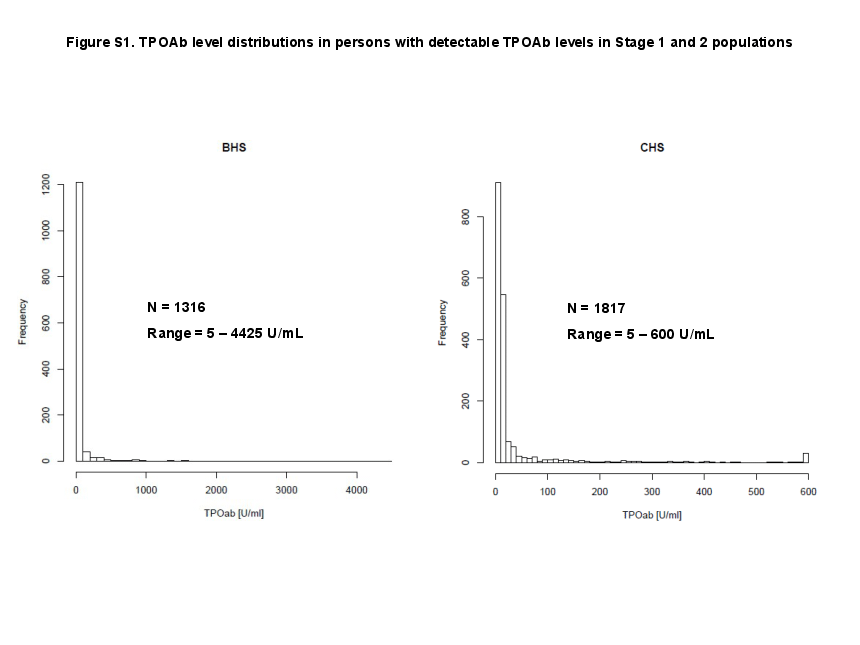
See Table 1 and Supplementary Figure S1 for TPOAb measurements and Supplementary Table S1 for genotyping procedures. In most autoimmune diseases, both the presence and the level of autoantibodies are relevant for the disease onset [18], [30], [31]. Furthermore, different pathophysiological processes may be involved in the initiation and severity of the autoimmune response. We therefore performed a
etc.etc.
Figure 1. Genome wide association studies meta-analyses: Loci associated with TPOAb-positivity (a–c) and TPOAb levels (d–f) on a genome-wide level of significance
http://www.plosgenetics.org/article/fet ... tion=PNG_I
Table 3. Genetic risk score and the risk of TPOAb-positivity.
http://www.plosgenetics.org/article/fet ... tion=PNG_I
Associations with hypo- and hyperthyroidism[
The associations between the 5 GWAS significant SNPs and the risk of abnormal thyroid function tests are shown in Table 4. MAGI3- rs1230666 was associated with an increased risk of overt hypothyroidism and increased TSH levels below the Bonferroni threshold (i.e., P = 0.05/5 = 0.01). Borderline significant signals were observed at BACH2- rs10944479 with a higher risk of increased TSH levels as well as overt hyperthyroidism (P = 0.011 and P = 0.012), and at the KALRN-rs2010099 SNP with a lower risk of decreased TSH levels (P = 0.010).
etc. etc.
Table 4. Newly identified TPOAb associated loci and the risk of thyroid disease in stage 1 and 2 populations.
http://www.plosgenetics.org/article/fet ... tion=PNG_I
Associations with goiter
Individuals with a high genetic risk score had a 30.4% risk of sonographically-proven goiter, compared to 35.2% in subjects with a low score (P = 6.5×10⁻⁴) (Table 5). None of the individual SNPs was significantly associated with goiter risk
Table 5. Newly identified TPOAb associated loci, genetic risk scores and the risk of goiter.
http://www.plosgenetics.org/article/fet ... tion=PNG_I
Thyroid autoimmunity during pregnancy
As autoimmunity significantly changes during pregnancy [25], we additionally studied these effects in an independent pregnant population. Pregnant women with a high genetic risk score had a 2.4 times increased risk of TPOAb-positivity compared to women with a low score (10.3% vs 4.8%, P = 0.03). These women did not have a higher risk of increased TSH levels. However, a borderline significant signal with a lower risk of increased TSH levels was observed at ATXN2- rs653178 (OR, 0.54 [95% CI, 0.34–0.87], P = 0.012).
etc. etc.
Discussion
This is the first GWAS meta-analysis investigating the genetics of TPOAbs in the normal population in up to 18,297 individuals from 11 populations with replication in up to 8,990 individuals from 5 populations. We identified 5 GWAS significant loci associated with TPOAb-positivity and/or levels.
The most significant hit for both TPOAb-positivity and TPOAb levels was located near the TPO gene itself. TPO is a membrane-bound protein located on the apical membranes of the thyroid follicular cell, catalyzing key reactions in thyroid hormone synthesis [33]. Mutations in TPO have been found in patients with congenital hypothyroidism [34], [35]. Although TPOAbs are valid clinical biomarkers of AITD, they are generally considered to be secondary to the thyroid damage inflicted by T-cells.
The FOXE1 gene has been previously associated with hypothyroidism [36], [37] and is known to regulate transcription of TPO [38]. In this context it is interesting to note that we did not find any associations of the variant near TPO with hypothyroidism. Most genes that have been associated with AITD (predominantly Graves' disease) by candidate gene and GWAS studies so far are located in the HLA class I and II regions, or in genes involved in T-cell (i.e., CTLA-4, PTPN22) or other autoimmune responses [28], [39]. Until now, the TPO gene itself had not been associated with AITD, except in one recent candidate gene analysis in a small cohort (n = 188) without replication [40]. A variant near TPO (rs11694732), which is in LD with rs11675434 (r2 = 0.97 in HapMap2), has previously been associated with TSH levels by Gudmundsson et al [41]. However, various other GWAS on serum TSH and FT4 levels have not found any significant associations in or near this locus, including a recent similar sized GWAS by Porcu et al [42].
Three of the other four loci identified here are located in or are in linkage disequilibrium (LD) with genes previously associated with other autoimmune diseases. Rs1230666 is located in intron 9 of MAGI3, encoding a protein that modulates activity of AKT/PKB. AKT/PKB is expressed in the thyroid and regulates apoptosis [43], which seems to play an important role in the development of AITD [44], [45]. In addition, rs1230666 is in LD with rs2476601 (r2 = 0.70 in HapMap2), a variant causing a R620W substitution in PTPN22. PTPN22 is a lymphoid-specific intracellular phosphatase involved in the T-cell receptor signaling pathway. Variations in PTPN22, and specifically R620W, are associated with various autoimmune disorders including type 1 diabetes, rheumatoid arthritis, systemic lupus erythematosus and Graves' disease [46], [47], [48], [49]. The associations of the MAGI3 locus with TPOAb-positivity and Graves' disease may therefore also be explained by linkage with disease-associated variants in PTPN22 [50]. Of note, the association signal at rs2476601 is one order weaker than that of the top variant rs1230666.
The BACH2 locus has been implicated in the susceptibility to several autoimmune diseases, including celiac disease, type 1 diabetes, vitiligo, Crohn's disease, and multiple sclerosis [46], [51], [52], [53], [54]. A recent candidate gene analysis associated the BACH2 locus with an increased risk of AITD, including Hashimoto's thyroiditis and Graves' disease [55]. However, the associations were not significant when Hashimoto's thyroiditis and Graves' disease were studied separately. BACH2 is specifically expressed in early stages of B-cell differentiation and represses different immunoglobulin genes [56]. Interestingly, BACH2 can bind to the co-repressor SMRT (silencing mediator of retinoid and thyroid receptor), which may suggest a more direct effect on thyroid hormone secretion and action as well.
Polymorphisms in ATXN2 have been associated with multiple neurodegenerative diseases, including spinocerebellar ataxia and Parkinson's disease [57], [58], [59]. Different epidemiological studies have associated thyroid dysfunction with cerebellar ataxia [60], [61]. Furthermore, the identified SNP in ATXN2 has been previously associated with renal function, serum urate levels and blood pressure [62], [63], [64]. However, this SNP is in high LD with rs3184504 (r2 = 0.873), a variant causing a Trp262Arg substitution of SH2B adaptor protein 3 (SH2B3). SH2B3 encodes the adaptor protein LNK, a key negative regulator of cytokine signaling playing a critical role in hematopoiesis. This variant is associated with susceptibility to several autoimmune diseases, including celiac disease, type 1 diabetes, vitiligo, and rheumatoid arthritis [46], [51], [53], [65], suggesting more relevance for TPOAb levels than ATXN2. This is supported by a recent study which showed that variants in LD with SH2B3, BACH2, and PTPN22 are associated with TPOAb levels in patients with type 1 diabetes [66].
Whereas the above four loci are located in genes involved in the immune response or the autoantigen, the KALRN (Kalirin) gene encodes a multi-domain guanine nucleotide exchange factor for GTP-binding proteins of the Rho family. The relation of KALRN with levels of TPOAbs is unclear. This gene has recently been found to be associated with megakaryopoiesis and platelet formation [67], which may suggest a function in the immune system [68]. We furthermore performed pathway analyses on the stage 1 TPOAb-positivity and TPOAb level lead SNPs, and identified the cell death, survival and movement pathway as an important pathway for TPOAbs. This finding is supported by previous studies, which show an important role for apoptosis in the development of AITD [44], [45]. Another top pathway involved was the OX40 signalling pathway, and it is of interest to note that OX40 is a T-cell activator promoting the survival of CD4+ T-cells at sites of inflammation [69].
Our results have potential clinical relevance for several reasons. Genetic risk scores based on these novel common (risk allele frequencies: 9–40%) TPOAb-associated SNPs enabled us to identify a large subgroup in the general population with a two-fold increased risk of TPOAb-positivity (10.4% vs 5.4%). These individuals also have a higher risk of increased TSH levels and a lower risk of goiter, suggesting an advanced stage of destruction of the thyroid due to autoimmune processes. Furthermore, pregnant women with high genetic risk scores had a 2.4 times increased risk of TPOAb-positivity during pregnancy. In this context it is interesting to note that TPOAb-positive pregnant women have an increased risk of miscarriages and preterm births independent of thyroid function [70].
Associations with thyroid disease were also found on an individual SNP level. The MAGI3 SNP was associated with a substantially increased risk of hypothyroidism, and the BACH2 SNP showed a borderline significant association (P = 0.011) with a higher risk of increased TSH levels, which includes subjects with subclinical and overt hypothyroidism. Furthermore, both loci were significantly associated with an increased risk of Graves' hyperthyroidism in an independent population. To predict which patients with first or second degree relatives with documented Hashimoto's or Graves' disease will develop clinical thyroid disease, a clinical algorithm has been developed (i.e., the THEA score) [18]. Future studies should analyze if these genetic markers increase the sensitivity of the THEA score. Graves' hyperthyroidism and Hashimoto's thyroiditis co-segregate in families and subjects with TPOAbs have an increased risk of both diseases [17], [18], [20], [21], [22], [26]. The current study provides insight into this phenomenon by showing that specific loci associated with TPOAbs and (subclinical) hypothyroidism, i.e. MAGI3 and BACH2, are also associated with Graves' hyperthyroidism in an independent case-control study.
The prevalence of TPOAb-positivity in the general population is high (5–24%), but it is currently unknown why part of the individuals with thyroid autoimmunity develop clinical thyroid disease whereas others do not [27], [28]. In this context it is interesting to note that the TPOAb-associated SNPs located in TPO and ATXN2 were not associated with clinical thyroid disease. This suggests that the TPOAbs in these individuals may be of less clinical relevance, providing insight into why TPOAb-positive individuals do or do not eventually develop clinical thyroid disease.
Our study has some limitations. The validity of the results is restricted to individuals from populations of European ancestry. Future GWASs in populations from non-European descent will be required to determine to which extent our results can be generalized to other ethnic groups. Secondly, we did not perform conditional analyses to further identify secondary association signals within the identified loci, nor did we perform functional studies for the identified variants. Further research is therefore needed to unravel the exact biological mechanism behind the observed associations. The fact that various TPOAb assays were used across the participating cohorts could lead to bias. We therefore used TPOAb-positivity cut-off values as provided by the respective assay manufacturer, instead of using one fixed cut-off value. This is also of clinical importance as in clinical practice most institutions rely on the TPOAb-positivity cut-off as provided by the assay manufacturer. Furthermore, we did not detect heterogeneity in our results, supporting the fact that results obtained with different assays can be combined across cohorts using the z-score based meta-analysis. Finally, as AITD coincides with other autoimmune diseases, our results could be driven by indirect associations with other autoimmune diseases. However, AITD is the most common autoimmune disease in the general population. We furthermore show that carriage of multiple risk alleles is associated with an increased risk of thyroid dysfunction, which underlines the clinical importance of our findings.
In conclusion, this first GWAS for TPOAbs identified five newly associated loci, three of which were also associated with clinical thyroid disease. Furthermore, we show that carriage of multiple risk variants is not only associated with a substantial increased risk of TPOAb-positivity, but also with a higher risk of increased TSH levels (including subclinical and overt hypothyroidism) and a lower risk of goiter. These genetic markers not only help to identify large groups in the general population with an increased risk of TPOAb-positivity, but may also predict which TPOAb-positive persons are particularly at risk of developing clinical thyroid disease.
Materials and Methods
Study cohorts
For the TPOAb GWAS stage 1 and 2 analyses, and the hypothyroidism, hyperthyroidism and goiter analyses, individuals were recruited from 16 independent community-based and family studies. For the Graves' disease analyses, cases were recruited from the United Kingdom Graves' disease cohort and controls from the British 1958 Birth Cohort. Thyroid cancer cases and controls were recruited from the Nijmegen and Ohio thyroid cancer cohorts. A detailed description of the original cohorts contributing samples is provided in Table 1 and in the Supplementary Material. All participants provided written informed consent and protocols were approved by the institutional review boards or research ethics committees at the respective institutions, and conducted according to the Declaration of Helsinki.
Phenotype definitions
Serum TPOAb levels were determined with a range of assays. TPOAb-positives were defined as subjects with TPOAb levels above the assay-specific TPOAb-positivity cut-off, as defined by the manufacturer (Table 1). Serum TSH and free thyroxine (FT4) levels were determined
etc. etc.
Association analyses
The heritabilities of TPOAb-positivity and serum TPOAb levels were estimated, as described in the Supplementary Material.
In stage 1, we performed a GWAS on TPOAb-positivity as well as a GWAS on continuous TPOAb levels. Persons taking thyroid
etc. etc.
http://s3-eu-west-1.amazonaws.com/previ ... 0/p_01.png
TPOAb level distributions in persons with detectable TPOAb levels in stage 1 and 2 populations.
Gehele artikel met tabellen en figuren:
http://www.plosgenetics.org/article/fet ... tation=PDF
Identificatie nieuwe genetische loci met tpo-antilichamen
1 bericht
• Pagina 1 van 1
Identificatie nieuwe genetische loci met tpo-antilichamen
 door ineke » vr 07 maart 2014, 15:56
- ineke
- Berichten: 163
- Geregistreerd: vr 02 maart 2012, 14:03
1 bericht
• Pagina 1 van 1
Keer terug naar Waardevolle informatie met bronvermelding
Wie is er online
Gebruikers op dit forum: Geen geregistreerde gebruikers. en 1 gast